
It’s a hot September day. Unseasonably so. Weather extremes are being felt more and more frequently, affecting millions and millions around the globe. Stewardship of the land and waters that sustain us has fallen by the wayside. Hunger is a global disgrace. And even poets– not economists or think- tanks, were able to pin-point the cause of so much of the world’s misery.
I have taken a brief description of Roque Dalton’s work from Wikipedia:
Roque Antonio Dalton García (San Salvador, El Salvador, 14 May 1935 – Quezaltepeque, El Salvador, 10 May 1975), born Roque Antonio García, better known as Roque Dalton, was a Salvadoran poet, essayist, journalist, communist activist, and intellectual. He is considered one of Latin America’s most compelling poets. He wrote emotionally strong, sometimes sarcastic, and image-loaded works dealing with life, death, love, and politics.
He studied at the University of Chile and the University of El Salvador (where he studied law) without taking an academic degree. He also visited the National Autonomous University of Mexico. While in Chile, he began studying Marxism. Upon his return to El Salvador, he became a figure in local politics. He began writing poetry after helping found the University Literary Circle. He joined the Communist Party of El Salvador. He was imprisoned in 1959 and 1960 for inciting revolt during the presidency of José María Lemus.
In 1961, he was exiled from El Salvador. He spent time in Mexico, Czechoslovakia, and Cuba, where most of his poetry was published. In Cuba, he received military training after the Bay of Pigs Invasion. After returning to El Salvador in 1965, he was arrested and interrogated by an agent of the Central Intelligence Agency. In 1969, he returned to Cuba and then Prague to work as correspondent for The International Review: Problems of Peace and Socialism. In the same year, he won the Poetry Prize Casa de las Américas for his book Taberna y otros lugares.
After leaving Cuba, Dalton became involved in El Salvador’s civil war, joining the People’s Revolutionary Army (ERP) in 1973. In the ERP, he found himself in a serious internal dispute with leader Alejandro Rivas Mira, who had become an influential leader of the armed group. As a consequence of the dispute, the leadership of the ERP decided to execute him.
He is remembered for his bohemian lifestyle and the jovial, irreverent personality reflected in his literary work, as well as his commitment to social causes in El Salvador. His work is diverse, going beyond the influences of his Marxist beliefs. He is considered one of the most influential Salvadoran writers. Posthumously, he has received recognition as “Hijo Meritísimo” and “Poeta Meritísimo” by the Salvadoran government and an honorary doctorate degree from the Universidad de El Salvador.
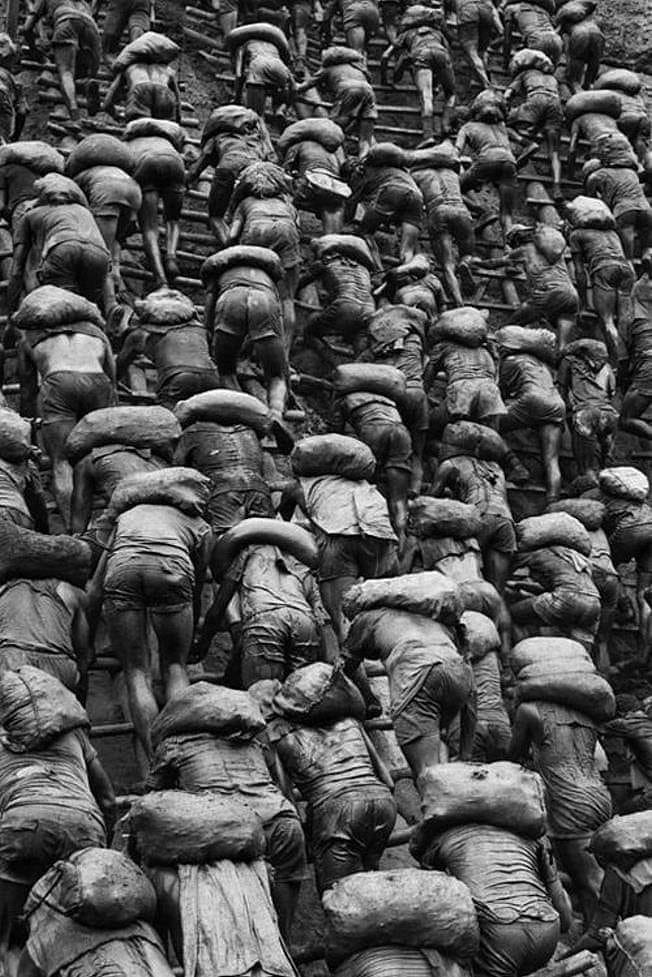
ACTA. Roque Dalton
En nombre de quienes lavan ropa ajena
(y expulsan de la blancura la mugre ajena).
En nombre de quienes cuidan hijos ajenos
(y venden su fuerza de trabajo
en forma de amor maternal y humillaciones).
En nombre de quienes habitan en vivienda ajena
(que ya no es vientre amable sino una tumba o cárcel).
En nombre de quienes comen mendrugos ajenos
(y aún los mastican con sentimiento de ladrón).
En nombre de quienes viven en un país ajeno
(las casas y las fábricas y los comercios
y las calles y las ciudades y los pueblos
y los ríos y los lagos y los volcanes y los montes
son siempre de otros
y por eso está allí la policía y la guardia
cuidándolos contra nosotros).
En nombre de quienes lo único que tienen
es hambre explotación enfermedades
sed de justicia y de agua
persecuciones condenas
soledad abandono opresión muerte.
Yo acuso a la propiedad privada
de privarnos de todo.

ACT of LAW
In the name of those who wash others’ clothes
(and expel from the whiteness the alien dirt)
In the name of those who look after the children of others
(and sell their labour power in the form of maternal love and humiliations)
In the name of those who live in the homes owned by others
(no longer the lovable womb but a grave or prison)
In the name of those who eat the food of charity
(and chew it feeling as though they were a thief)
In the name of those who live in the land of others
(the house and the factories and the businesses and the streets and the cities and the peoples
and the rivers and the lakes and the mountains
are always of others
and for this reason, the police and the rural guard take care of us for them).
In the name of those who only have
hunger exploitation illnesses
thirst for justice and for water
condemned to persecution
loneliness abandonment oppression death.
I accuse private property
of depriving us of everything.
(trans. Kaushalya Bannerji)
Discover more from Ear to the Ground
Subscribe to get the latest posts sent to your email.

 Ear to the Ground